road / Chapter 3
Breaking away
from the road
Riders challenge the labels and stereotypes surrounding the motorcycle culture.
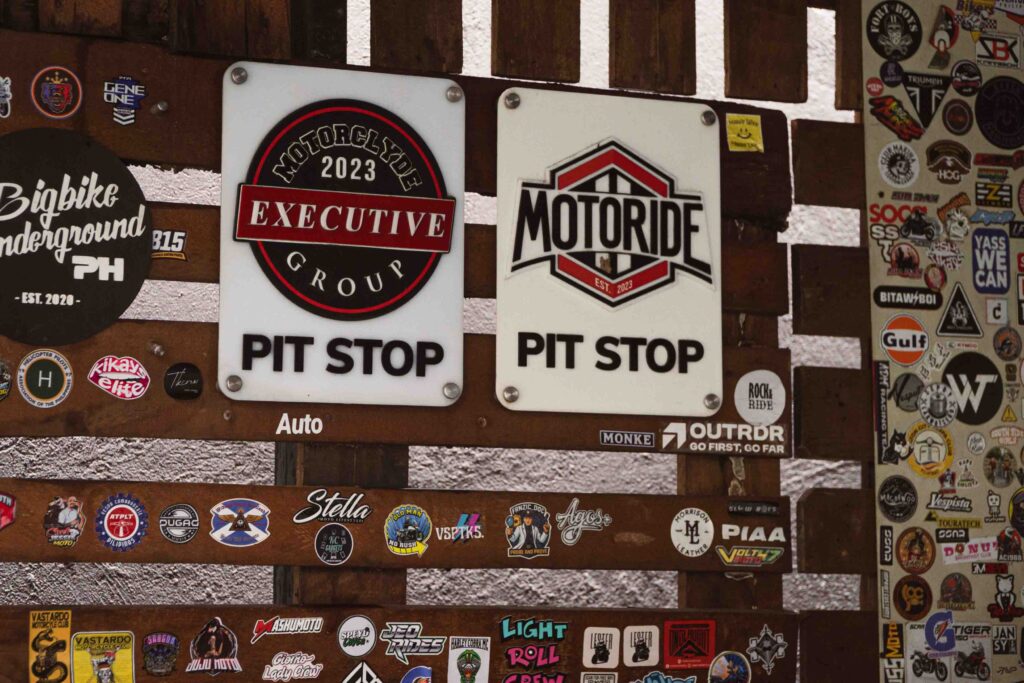
Manila’s women motorcycle riders have heard nearly every assumption in the book. They have been told that women who ride big bikes are closeted lesbians, that they do it for men’s attention, and that anyone who can afford a machine that size must be a show-off. They have been called careless, too, or dismissed as reckless riders who have no business on the road.
For the women of Litas Manila, however, these assumptions say little about the people behind the helmets.
Too masculine
Too feminine
The assumption
A woman who takes up something masculine must be less feminine.
Motorcycling remains largely associated with men, leaving women who enter the space to contend with assumptions about how a female rider should look and behave. Ride something big, fast, and loud, and even femininity can come into question.
One assumption follows women onto big bikes: that riding one makes them lesbians. Erika Fernandez has heard it often enough to laugh. “They’re like, ‘Karen’s a lesbian. […] she rides a motorbike,'” she recounts. “[But] Karen’s the straightest person I know, and it doesn’t even matter.” Beneath the joke is an assumption about gender: that a woman who takes up something seen as masculine must somehow be less feminine.
Luckie Masbad pushes against that idea by making her femininity visible. She chooses pink gloves, sparkly communication equipment and, sometimes, pink boots without compromising safety. The choices are deliberate, but they are also practical.
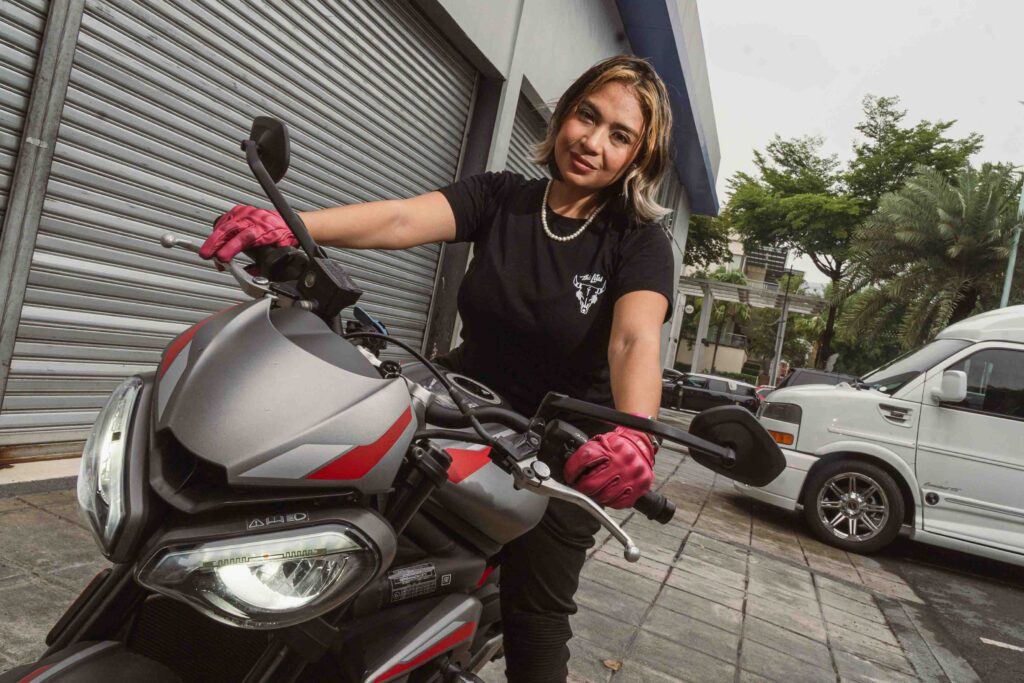
“I want them to see me on the road. I want them to know that there’s a [female] biker out there.”
Luckie Masbad
She rides to be looked at.
The assumption
Yet whether they appear feminine or masculine, women riders face another assumption: that they ride for male attention. Fernandez has heard people dismiss women as riding simply to be noticed, an idea she says does not reflect most of the riders she knows. For them, riding begins with an interest in motorcycles, not an audience.
“A lot of us actually do it because we want to ride motorcycles, and that’s it.”
Masbad
Before a woman can simply be someone who enjoys motorcycles, her presence is read through gender: what she wears, how she looks, and what her motorcycle is supposed to say about her. For these women, getting on a motorcycle becomes its own quiet refusal to be explained by any of it.
Mayabang Kamote
On and off the bike
mayabang
Boastful. Applied to big-bike owners on sight, as though the machine were bought for display rather than earned over years.
kamote
Reckless, undisciplined on the road.
Not every stereotype is about gender. Big bikes draw their own judgments, with riders often branded as mayabang for the machines they ride. The group has seen the sentiment play out on Facebook, where commenters reduce big-bike ownership to showing off or spending money for display. Their size and price can easily turn the motorcycle into a symbol of wealth rather than a passion pursued over time.
For Fernandez, that judgment overlooks the work behind owning one. “There are plenty of big-bike riders who work so hard to purchase these bikes,” she said. What may look like showing off from the outside, she argues, can instead be the product of years of work spent affording the ride.
But if the motorcycle can make its rider look boastful off the road, being on it invites another judgment: kamote. Masbad recognizes where the perception comes from but cautions against letting reckless riders define everyone on two wheels. For many Filipinos, she points out, motorcycles are not luxuries but practical means of getting from one place to another.
“This is our lives
on the line.”
“Just because you’re riding a motorcycle doesn’t mean you’re reckless.”
Luckie Masbad
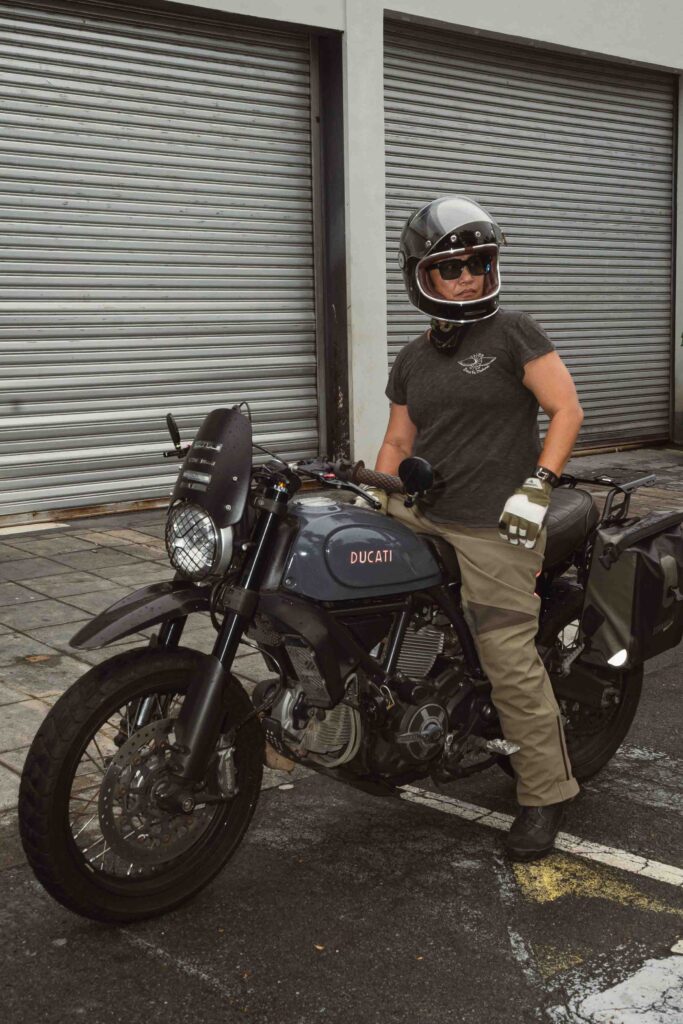
For big-bike riders, that responsibility becomes harder to ignore when the risks are their own.
Carol Karthe, one of Litas Manila’s more experienced riders, makes a similar distinction. Reckless motorists exist, she acknowledges, but responsible riding means knowing both the rider’s and the machine’s limits.
Riding means navigating more than the road itself. On and off their bikes, they find themselves riding against labels that often speak for them before they have the chance to speak for themselves.
Breaking through
For the women of Litas Manila, challenging these assumptions does not always mean confronting them. Sometimes, being visible is enough. “When they see, especially if you’re a woman rider, they’re actually more curious,” Karthe said. Strangers ask about her motorcycle, and over time, she has watched that curiosity grow into greater acceptance of women riders.
That visibility matters to Masbad, too. She thinks of her 12-year-old niece, who has already completed off-road riding school, and what it means for younger girls to see women handling motorcycles and taking safety seriously.
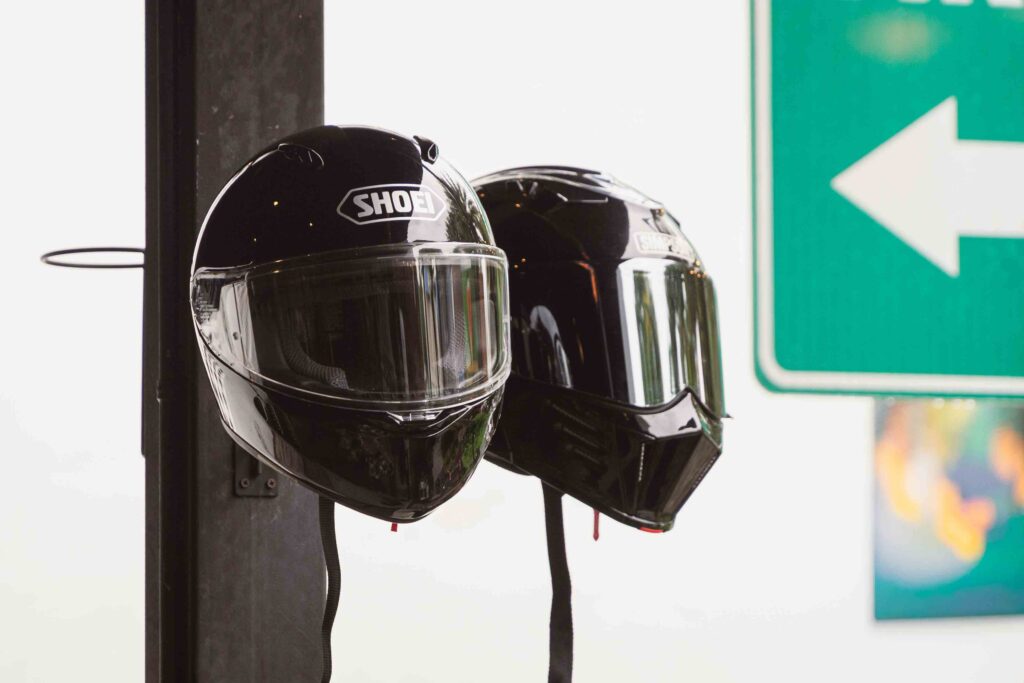
Here, breaking through is less about proving that women can ride than reaching a point where no proof is expected of them. The road may still carry assumptions about who belongs on what bike, but every woman who rides makes those boundaries harder to draw.
The magazine
Bisikleta is a magzine about Filipino motorcycle riders. It was made to break the stereotypes that follow motorcyclists in the Philippines starting with the women who ride.
The team
Gwen Cabinbin
Justine Petilla
Jyor So